

Category: Blog
DNA Software Receives the 2023 Technology Innovation Leadership Award

DNA Software has been identified as best in class in the North American multiplex PCR solutions industry.
Frost & Sullivan applies a rigorous analytical process to evaluate multiple nominees for each Award category before determining the final Award recipient. The process involves a detailed evaluation of best practices criteria across two dimensions for each nominated company. DNA Software excels in many of the criteria in the multiplex polymerase chain reaction solutions space.
Multiplex Polymerase Chain Reaction: Market Overview
Pharmaceuticals and biotechnology companies consider polymerase chain reaction (PCR) the gold standard for modern diagnostics. Unlike conventional singleplex PCR, multiplex PCR simultaneously detects multiple targets in a single reaction well. As a result, Frost & Sullivan notes that its advantages include cost effectiveness, timesaving, higher throughput, increased data normalization accuracy, reduced pipetting errors, and deriving more information with a smaller sample.
However, multiplex panel designs must ensure accuracy to avoid false negatives. Technique limitations include insufficient models and knowledge regarding hyrbidization, suboptimal tools (design freeware), and advanced algorithms operating on inadequate information technology infrastructure. DNA Software™ (DNAS) uniquely leverages its expertise to meet customer needs. Frost & Sullivan analysts observe that the company is well-positioned to capitalize on new growth opportunities, cementing its position in the multiplex PCR solutions market.
A Commitment to Innovation and Creativity
Founded in 2000 and headquartered in Michigan, the United States (US), DNAS is a deoxyribonucleic acid (DNA) diagnostic design and analysis solutions provider. The company has helped hundreds of organizations overcome challenges and increased clients’ time-to-market through its cutting-edge multiplex software. In 2019, Frost & Sullivan recognized DNAS for its multiplex software, reflecting cloud computing, modern algorithms, and a deep understanding of PCR mechanisms, and remains impressed © Frost & Sullivan 2023 The Growth Pipeline Company™
with the company’s continuing innovation and recent offering of pre-validated PCR kits. DNAS recognizes unmet client needs and ensures that it develops solutions truly meeting customer and market demands. Burgeoning from the renowned scientist Dr. John SantaLucia Junior’s laboratory at Wayne State University, the company nurtures a research-focused culture propelling innovation. The team includes world-leading DNA and ribonucleic acid (RNA) biophysical chemistry experts who develop best-in-class algorithms for predicting hybridization and folding. As a result, DNAS’ technology accelerates the discovery process from months to minutes – saving an impressive 80% of research and developmentrelated resources.
Its software offerings include:
- OMP-DE™: The Oligonucleotide Modeling Platform is DNAS’ programmable predictive modeling environment that forms the core of its product line. OMP encapsulates the company’s chemical and biological data into a single design and simulation PCR script software platform.
- ThermoBLAST™: Addresses primer specificity by scanning multiple primers against genome collections to find all hybridizations and amplicons. Unlike the traditional BLAST, it captures critical mishybridization hits through appropriate thermodynamic scoring based on complementarity as opposed to similarity, displaying all false amplicons, considering extensibility and stable mismatches, and allowing for solution conditions, buffers, salt, additives, and other experimental factors.
- CopyCount™: A breakthrough in understanding quantitative (q) PCR, the product allows for the absolute quantifying of qPCR, eliminating the need for a standard curve, excessive replicates, or sample dilution. As a result, CopyCount saves time and money, generates easy-to-interpret results, and is compatible with existing qPCR instrumentation.
- Visual OMP™: Desktop software for visualizing and simulating assay artifacts.
- PanelPlex™: The multiplex PCR design software for cancer panels, anti-microbial resistance, and other applications has been rigorously validated for detecting diverse bacteria, viruses, and human targets. It saves an average of six to nine months of iterative experimental trial-and-error optimization, produces diagnostic quality designs and automated consensus designs of multiple variants of DNA or RNA targets, uses ThermoBLAST playlists to scan for off-target hybridizations, and scales the multiplex PCR assay design process.
- PanelPlex™-Consensus: Rigorously validated for detecting more than 1,000 bacteria, viruses, and human targets with wet-lab-validated results, the consensus design for infectious diseases leverages cloud computing. It saves an average of at least six months of iterative experimental trial-and-error optimization, produces diagnostic quality designs and automated consensus designs of multiple variants of DNA or RNA targets, uses ThermoBLAST playlists to scan for off-target hybridizations, scales the multiplex PCR assay design process, and has a massive capability.7
Cayman Chemical Expands Molecular Diagnostic Research Offerings Through Partnership with PCRassays.com
ANN ARBOR, MI, JUNE 5, 2024—Cayman Chemical, a leading supplier of research tools for the life science community, has widened their portfolio to include molecular-based detection kits through a strategic partnership with PCRassays.com. PCRassays.com offers more than 200 qPCR-based assays for infectious diseases, over 50 of which are multiplex assays, including panels for wound, upper respiratory, urinary tract, and sexually transmitted infections.
“We are delighted to be partnering with Cayman Chemical to provide our portfolio of assays worldwide,” said shared company founder and CEO, John SantaLucia. “Cayman has a long-standing and exceptional breadth of products offered to the research community, and we’re enthusiastic about adding further value for researchers.” PCRassays.com’s line of products has been designed using DNA Software, the industry-leading multiplex design software. Multiplex PCR kits save researchers time and expenses by allowing for simultaneous detection, minimal enzyme amounts, and high-throughput analysis.
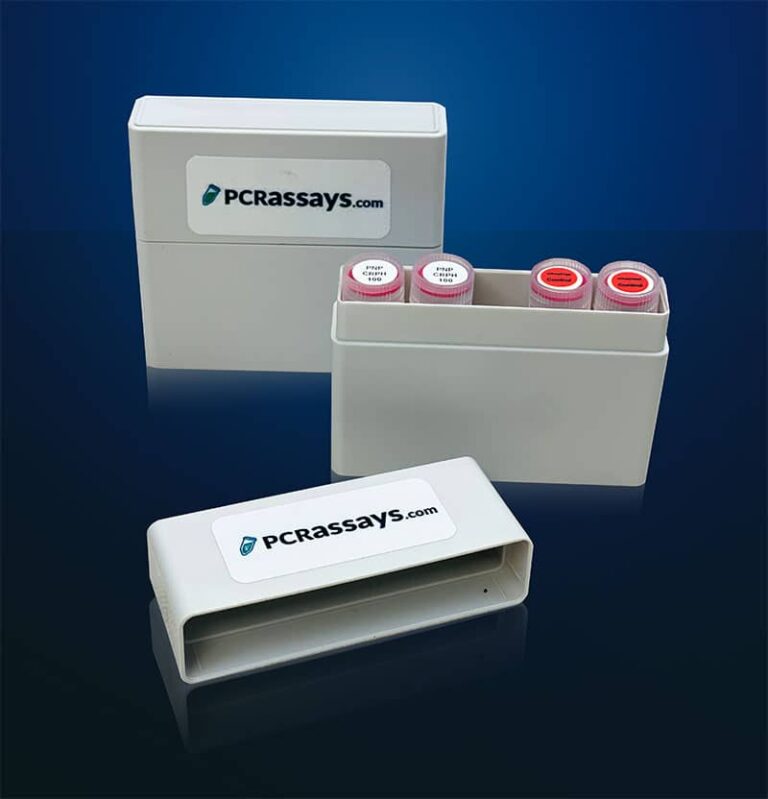
PCRassays.com is based out of Plymouth, MI and one of the many biotechnology companies representing Michigan, making this a growing hub for the life sciences. “We are honored and proud to be a part of a consortium of Michigan-based companies impacting the life sciences ecosystem in a meaningful way,” added Dr. SantaLucia. “We have engineered our enzyme formulations with Fortis (Empirical Biosciences), collaborated with the State of Michigan Department of Health and Human Services for the development of a novel assay, and have now partnered with Cayman Chemical, the leading Michigan-based company supplying life science reagents for researchers worldwide.”
To view products offered by Cayman Chemical & PCRassays.com, visit www.caymanchem.com/pcrassays |
About Cayman Chemical
Cayman Chemical helps make research possible by supplying scientists worldwide with biochemical tools used to understand cancer, neurochemistry, oxidative injury, endocrinology, atherosclerosis, and other human health challenges. Our scientists are experts in the synthesis, purification, and characterization of biochemicals ranging from small drug-like heterocycles to complex biolipids, fatty acids, and many others for use as research reagents and qualified standards. We are also highly skilled in all aspects of assay and antibody development, protein expression, crystallization, and structure determination. In addition, we offer a wide range of analytical services using LC-MS/MS, HPLC, GC, and many other techniques. Cayman performs generic drug development and production in both Ann Arbor, Michigan and Neratovice, Czech Republic. Learn more at www.caymanchem.com.
About PCRassays.com
PCRassays.com provides multiplexed research use only qPCR kits for the detection of human pathogens, food borne pathogens, wastewater surveillance, and research-based applications. PCRassays.com offers flexible multiplex configurations and has an automated design platform (DNA Software) for ever changing market dynamics. The team at PCRassays.com has world-leading expertise in nucleic hybridization, structure folding, and thermodynamics. In addition to our assays, we offer client services for custom assay design and development.
Which Version of the Human Genome Should I Use?
Written by John SantaLucia, Jr.
Updated 5-5-2024
Sequencing of the human genome required an international effort over 35 years starting in the late 1980’s with the first rough draft (<90% complete) published in 2001.1,2 Over the next 12 years the completion improvements released in 2009 (GRCh37) and 2013 (GRCh38).3,4 The GRCh38 version was 92% complete, and was widely utilized in studies of human disease and variation. Then, finally in 2022 the Telomere-to-Telomere consortium (T2T) finished the first truly complete human genome sequence.5-12 Due to this history, there is a vast quantity of literature that use the coordinates from the older sequences. For example, there are many exome sequencing databases and SNP databases (such as dbSNP and COSMIC) that use the older GRCh37 and GRCh38 versions. Thus, a common question that we get is “Which version of the human genome should I use?”. Table 1 gives the RefSeq accessions for three most widely used versions of the human genome. The RefSeq accessions are preferred over GenBank accessions, because the RefSeq accessions also contain the full annotation information for genes, ncRNAs, and other features (though the T2T version of mitochondria has not yet been deposited into RefSeq). The T2T version has no ambiguity codes, no gaps, and corrects previous scaffold mistakes. Table 2 gives the percentage ambiguity codes for each chromosome in the three different versions of the human genome (data compiled using ThermoSleuth from DNA Software, Inc.). Table 3 gives different metrics of completion for the three different versions of the human genome.3 Table 4 gives a detailed comparison of the T2T vs. GRCh38 versions.5
We strongly encourage our users to utilize the T2T version, which is the first truly complete human genome sequence. Both ThermoSleuth and PanelPlex support all 3 major versions of the human genome (Table 1). If you need to convert coordinates from different genome versions, see the links in the “Additional Resources” section.
Additional resources:
- Website with information about annotations in the T2T genome: https://www.ncbi.nlm.nih.gov/refseq/annotation_euk/Homo_sapiens/GCF_009914755.1-RS_2023_03/
- Useful website for converting between different genome versions (this is fine if you just have a few conversions to do): http://genome.ucsc.edu/cgi-bin/hgLiftOver
- Useful site that describes several different software packages for high-throughput conversion of many coordinates between different genome versions: https://www.biostars.org/p/65558/
- Website that describes the differences between hg19 and hg38: http://seqanswers.com/forums/showthread.php?t=75570
- Website for converting a chromosome location to transcript oriented position: https://mutalyzer.nl/position-converter
- Other tools: Bowtie2, Picard Tools, SAMtools
Table 1: RefSeq Accessions for Three Versions of the Human Genome
| Chromosome | GRCh37.p13 (hg19) | GRCh38.p7 (hg38) | T2T (CHM13v2.0) |
|---|---|---|---|
| 2-27-2009 | 12-17-2013 | 4-1-2022 | |
| 1 | NC_000001.10 | NC_000001 or NC_000001.11 | NC_060925.1 |
| 2 | NC_000002.11 | NC_000002 or NC_000002.12 | NC_060926.1 |
| 3 | NC_000003.11 | NC_000003 or NC_000003.12 | NC_060927.1 |
| 4 | NC_000004.11 | NC_000004 or NC_000004.12 | NC_060928.1 |
| 5 | NC_000005.9 | NC_000005 or NC_000005.10 | NC_060929.1 |
| 6 | NC_000006.11 | NC_000006 or NC_000006.12 | NC_060930.1 |
| 7 | NC_000007.13 | NC_000007 or NC_000007.14 | NC_060931.1 |
| 8 | NC_000008.10 | NC_000008 or NC_000008.11 | NC_060932.1 |
| 9 | NC_000009.11 | NC_000009 or NC_000009.12 | NC_060933.1 |
| 10 | NC_000010.10 | NC_000010 or NC_000010.11 | NC_060934.1 |
| 11 | NC_000011.9 | NC_000011 or NC_000011.10 | NC_060935.1 |
| 12 | NC_000012.11 | NC_000012 or NC_000012.12 | NC_060936.1 |
| 13 | NC_000013.10 | NC_000013 or NC_000013.11 | NC_060937.1 |
| 14 | NC_000014.8 | NC_000014 or NC_000014.9 | NC_060938.1 |
| 15 | NC_000015.9 | NC_000015 or NC_000015.10 | NC_060939.1 |
| 16 | NC_000016.9 | NC_000016 or NC_000016.10 | NC_060940.1 |
| 17 | NC_000017.10 | NC_000017 or NC_000017.11 | NC_060941.1 |
| 18 | NC_000018.9 | NC_000018 or NC_000018.10 | NC_060942.1 |
| 19 | NC_000019.9 | NC_000019 or NC_000019.10 | NC_060943.1 |
| 20 | NC_000020.10 | NC_000020 or NC_000020.11 | NC_060944.1 |
| 21 | NC_000021.8 | NC_000021 or NC_000021.9 | NC_060945.1 |
| 22 | NC_000022.10 | NC_000022 or NC_000022.11 | NC_060946.1 |
| X | NC_000023.10 | NC_000023 or NC_000023.11 | NC_060947.1 |
| Y | NC_000024.9 | NC_000024 or NC_000024.10 | NC_060948.1 |
| mitochondria | NC_012920.1 | NC_012920.1 | CP068254.1 or NC_012920.1 |
Table 2: Percent ambiguity in different versions of the human genome
(data from ThermoSleuth (DNA Software, Inc.)
| Chromosome | GRCh37.p13 (hg19) | GRCh38.p7 (hg38) | T2T (CHM13) |
|---|---|---|---|
| 1 | 9.62 | 7.42 | 0 |
| 2 | 2.05 | 0.68 | 0 |
| 3 | 1.63 | 0.1 | 0 |
| 4 | 1.83 | 0.24 | 0 |
| 5 | 1.78 | 0.15 | 0 |
| 6 | 2.17 | 0.43 | 0 |
| 7 | 2.38 | 0.24 | 0 |
| 8 | 2.37 | 0.26 | 0 |
| 9 | 14.92 | 12.00 | 0 |
| 10 | 3.11 | 0.40 | 0 |
| 11 | 2.87 | 0.41 | 0 |
| 12 | 2.52 | 0.10 | 0 |
| 13 | 17.00 | 14.32 | 0 |
| 14 | 17.76 | 15.39 | 0 |
| 15 | 20.32 | 17.01 | 0 |
| 16 | 12.69 | 9.45 | 0 |
| 17 | 4.19 | 0.41 | 0 |
| 18 | 4.38 | 0.35 | 0 |
| 19 | 5.62 | 0.30 | 0 |
| 20 | 5.69 | 0.78 | 0 |
| 21 | 27.06 | 14.18 | 0 |
| 22 | 31.99 | 22.94 | 0 |
| X | 2.69 | 0.74 | 0 |
| Y | 55.79 | 53.84 | 0 |
Table 3: Completion metrics for different versions of the human genome3
| Metric | GRCh37.p13 (hg19) | GRCh38.p7 (hg38) | T2T (CHM13) |
|---|---|---|---|
| Number of ambiguities | 234350281 | 150630719 | 0 |
| Unplaced scaffolds | 39 | 127 | 0 |
| Collapsed repeats | Yes | Yes | No |
| Percent Completion | 90% | 92% | 100% |
Table 4: Comparison of GRCh38 and T2T versions of Human Genome5

References:
- International Human Genome Consortium. “Initial sequencing and analysis of the human genome” Nature, 409: 860-921 (2001).
- Venter, J.C. Adams, M.D., Myers, E.W., Li, P.W., Mural, R.J., et al. “The sequence of the human genome” Science, 291: 1304-1351 (2001).
- Guo, Y., Dai, Y., Yu, H., Zhao, S., Samuels, D.C., Shyr, Y. “Improvements and impacts of GRCh38 human reference on high throughput sequencing data analysis” Genomics, 109, 83-90 (2017).
- V. A. Schneider, T. Graves-Lindsay, K. Howe, N. Bouk, H.-C. Chen, P. A. Kitts, T. D. Murphy, K. D. Pruitt, F. Thibaud-Nissen, D. Albracht, R. S. Fulton, M. Kremitzki, V. Magrini, C. Markovic, S. McGrath, K. M. Steinberg, K. Auger, W. Chow, J. Collins, G. Harden, T. Hubbard, S. Pelan, J. T. Simpson, G. Threadgold, J. Torrance, J. M. Wood, L. Clarke, S. Koren, M. Boitano, P. Peluso, H. Li, C.-S. Chin, A. M. Phillippy, R. Durbin, R. K. Wilson, P. Flicek, E. E. Eichler, D. M. Church, “Evaluation of GRCh38 and de novo haploid genome assemblies demonstrates the enduring quality of the reference assembly” Genome Res. 27, 849–864 (2017).
- Nurk, S. et al., “The complete sequence of a human genome” Science 376, 44–53 (2022).
- Pennisi, E. “Most complete human genome yet is revealed” Science 376, 15-16 (2022).
- Altemose et al., “Complete genomic and epigenetic maps of human centromeres” Science 376, 56–66 (2022).
- Hoyt et al., “From telomere to telomere: The transcriptional and epigenetic state of human repeat elements” Science 376, eabk3112 (2022).
- Gershman et al., “Epigenetic patterns in a complete human genome” Science 376, eabj5089 (2022).
- Aganezov et al., “A complete reference genome improves analysis of human genetic variation” Science 376, eabl3533 (2022).
- Vollger et al., “Segmental duplications and their variation in a complete human genome” Science 376, 55–66 (2022).
- Church, D.M., “A next-generation human genome sequence” Science 376, 34–35 (2022).
DNA Software: The Difference is in the Design
 DNA Software, Inc. (DNAS) is a Michigan-based life science company located in Plymouth, MI at the Michigan Life Sciences Innovation Center (MLSIC) facility. DNA Software offers state-of-the-art software for the design of nucleic acid diagnostics, particularly in the polymerase chain reaction (PCR) market.
Before COVID, PCR wasn’t necessarily the household term it has become today. Awareness for PCR rapidly increased throughout the pandemic as PCR based testing for disease is recognized as the “gold standard” in diagnostics. Suddenly an acronym that was foreign to most was in the daily news, on the bottom of the sports-ticker and became a new requirement for travel. At a $7B market size pre-COVID in 2019, molecular diagnostics today is a $25B industry in 2024 which will grow to greater than $50B in 2030.
DNA Software has always been uniquely positioned in the PCR and molecular diagnostics space, however, now finds itself at an inflection point in its 23rd year of business. Demand for PCR-based testing from healthcare providers continues to grow. This includes multiplexed PCR based detection methods as multiplex based testing enables many samples to be tested at once to save costs. Multiplexed PCR assays allow for the most accurate detection of many diseases, lowering costs and increasing throughput. “All multiplex roads in molecular diagnostics run through DNA Software” shares Dr. John SantaLucia, founder and CEO of DNA Software, Inc. “Whether licensing software, our services , or our assays, our expertise shines when designing multiple PCR tests simultaneously because of the foundational science discovered at my academic lab at Wayne State University (Detroit,MI) where I was a professor for nearly 30 years”.
PCR tests are not only limited to COVID and respiratory illness (such as FluA/FluB/RSVA/RSVB) but include everything from the flu and strep throat. This also includes a multitude of panels including UTIs (urinary tract infections), STIs (sexually transmitted infections) GI (gastrointestinal) along with many other commonly ordered pathogen tests. Customer benefits include detecting many pathogens simultaneously, superior results and limit of detection while decreasing per sample test costs along with a higher sample throughput.
DNA Software has provided “best in class” software to leading biotech firms for FDA approved molecular diagnostics. DNAS worked on custom projects with Moderna to characterize modified nucleotide behavior in the mRNA vaccine delivery. During the onset of COVID, the Department of Defense contacted DNAS to design SARS-CoV-2 assays along with biodefense panels. DNAS has long been recognized as an industry leader for its software, R&D and client services and was the 2023 recipient for the Frost & Sullivan “best in class” award for multiplex solutions provider in the industry.
PCRAssays, a DNA Software company
Through a “COVID Awakening”, DNA Software realized that R&D teams throughout the molecular diagnostics field relied on its science, algorithms, software and models for diagnostic design. Having provided software and client services to a “who’s who” list of biotech organizations including BD, Cepheid, Roche, Qiagen, Hologic, Thermo Fisher and Eli Lilly, DNAS moved to the MLSIC facility in late 2020 to manufacture its own line of PCR kits and assays through its new subsidiary, wwww.pcrassays.com. DNAS is uniquely positioned to leverage its technology to build high performing multiplexed PCR assays.
To capture more of the value they create, DNAS launched a new brand, PCRassays, which directly provides multiplexed RUO qPCR kits. These assays detect human pathogens, food borne pathogens, and are used for wastewater surveillance and research-based applications. PCRassays offers flexible multiplex configurations. Through its unique automated design platform (DNA Software), these “plug and play” assays are adaptable for ever changing market dynamics. PCRassays has transformed the firm’s digital assets into physical assets as the organization now ships reagents throughout the world for a variety of applications.
Spotlight on Michigan based partnerships
The DNAS subsidiary PCRassays has grown with several Michigan based partners. This includes the State of Michigan Department of Health and Human Services (DHHS) (Lansing, MI) to develop a novel Hepatitis A assay. Recent outbreaks in MI of Hepatitis A brought about the need for the rapid development of a qPCR-based assay and the State of MI elected to work with DNAS and PCRassays for their expertise in the development of such an assay.
The portfolio of infectious disease qPCR assays has grown to nearly 200 pathogens, >50 in multiplex. PCRassays has focused on growing channel partners and distribution to increase its adoption. Michigan based partnerships include enzyme manufacturer Fortis (Formerly Empirical Biosciences in Grand Rapids, MI). Fortis custom formulated an enzyme that optimizes PCRassays kits and its product performance overall.
DNAS has also partnered with Cayman Chemical, (Ann Arbor, MI) a global leading supplier of research tools for the life science community, to widen their portfolio to include molecular-based detection kits through a strategic partnership. To build inroads into the clinical market, DNAS partnered and signed a distribution agreement with Horiba Medical (Canton, MI) to make its assays available to the Horiba team of 80 international distributors.
PCRassays has customers in Michigan that include Great Lakes Medical Laboratories (Farmington, MI), Biogenetics (Southfield, MI) and World Wide Labz (Detroit, MI), Henry Ford Health System (Detroit, MI) and Wayne State University (Detroit, MI).
Recent Awards to DNAS
- 2019 Frost and Sullivan: “Multiplex PCR Software Enabling Technology Leadership Award”
- Part of Collaboration team that published paper on Hachimoji base pairs in Science 2019 (featured in NYT, CNN, Nature, NASA, and other news outlets)
- 2021 (to JSL): AOAC Award “Recognition of Technical and Scientific Excellence: COVID-19 Emergency Response Validation Program Advisory Group”
- 2020: Amazon AWS Diagnostic Development Initiative Award: Phase I
- 2022: Amazon AWS Diagnostic Development Initiative Award: Phase II
- 2022: DNAS wins NVIDIA Inception Award to implement GPU computation
Thought Leadership in the field: Led multi-agency panel (DoD, CDC, FDA, LNL, USDA, etc.) “Recommendations for Developing Molecular Assays for Microbial Pathogen Detection Using Modern In Silico Approaches,” SantaLucia, J., Jr., Sozhamannan, S., Gans, J.D., Koehler, J.W., Soong, R., Lin, N.J., Xie, G., Olson, V. Roth, K., Beck, L.S. J. AOAC Int., 103, 882-899 (2020).
AOAC INTERNATIONAL Certifies Three Test Kits for Detecting Novel Coronavirus on Surfaces
December 17, 2020
Accelerated scientific program speeds availability of validated test kits needed in manufacturing and other situations where maintaining surfaces free of coronavirus is a public health concern
Rockville, Maryland, December 18, 2020 – AOAC INTERNATIONAL announced today that it has issued Certificates of Validation for three proprietary test kits that detect SARS-CoV-2, the causative agent of COVID-19 illness, on environmental surfaces.
The three tests are the first to pass the rigorous independent evaluation required by the globally recognized AOAC Research Institute’s Performance Tested MethodsSM Program, which implemented an Emergency Response Validation process to accelerate the review process.
“Food manufacturers and contract labs have stringent protocols to ensure their facilities are free of harmful pathogens and more recently, viruses,” said Erin Crowley, president of AOAC INTERNATIONAL. “Now, they also have independently validated tests they can use to ensure their sanitation protocols are effective and they continue to provide a culture of safety for their essential employees.”
In this initial phase of the validation process, test kits were evaluated for detection of the virus on stainless steel surfaces only. AOAC will expand validation to a broader range of environmental surfaces and food matrices in a follow-up project.
While SARS-CoV-2 is known to be susceptible to standard disinfection methods,1 recent studies have shown that it can also be highly persistent on non-porous surfaces2 such as stainless steel.
Certifications were issued for the VERIPRO® SARS-CoV-2 Environmental Assay by bioMérieux; EnviroX-Rv by PathogenDx, and COVID-19 Indoor TestTM by Phylagen.
- The bioMérieux VERIPRO SARS-CoV-2 Environmental Assay uses molecular, one-step, reverse transcription polymerase chain reaction (RT-PCR) technology for qualitative detection of SARS-CoV-2. The VERIPRO SARS-CoV-2 Environmental Assay can be performed without the need for an optional RNA purification step. No clinical supplies or reagents are required to run the VERIPRO SARS-CoV-2 Environmental Assay, freeing up critical clinical COVID-19 testing resources. The test is commercially available and can be run on all GENE-UP® Real Time PCR systems.
- The PathogenDx EnviroX-Rv assay is a test based on end-point RT-PCR coupled to DNA microarray hybridization for the detection of multiple genes within SARS-CoV-1 and SARS-CoV-2 viruses. The advantage of the EnviroX-Rv assay is its ability to deliver a higher level of sensitivity as demonstrated by its lower limit of detection in comparison to the reported qRT-PCR assays approved by the U.S. Food and Drug Administration Emergency Use Authorization. Additionally, the DNA microarray provides unmatchable multiplexing power where numerous viruses and clades can be detected off a single swab at an affordable cost. The test is already in commercial use and available.
- The COVID-19 Indoor TestTM by Phylagen is a SARS-CoV-2 qualitative detection method that extracts the SARS-CoV-2 RNA from environmental swabs and detects it utilizing RT- PCR technology. Environmental surface swabs are collected by the customer and shipped back to Phylagen, Inc. for sample processing. Sample data are analyzed, and results are reported through a tracking portal. The test is commercially available for sampling surfaces and is a single site method for the detection portion of the test method.
To perform the reviews, the AOAC Research Institute technical consultants (Patrick Bird, Sharon Brunelle Ph.D., Maria Nelson and Zerlinde Johnson) assembled a team of analytical science experts.
- Laura J. Rose is a Microbiologist at the Healthcare Environment Applied Research Team, Clinical and Environmental Microbiology Branch, Division of Healthcare Quality Promotion of the U.S. Centers for Disease Control and Prevention.
- John SantaLucia, Jr. Ph.D. is President and Co-founder of DNA Software, Inc. and a Professor at Wayne State University.
- Chengzhu Liang, Ph.D. is Director of Technical Center of Qingdao customs in the People’s Republic of China as well as President of the AOAC China Section.
- Sanjiv R. Shah, Ph.D. is a Senior Microbiologist in the Homeland Security Research Program of the U.S. Environmental Protection Agency’s Office of Research and Development.
- Jacquelina Williams-Woods, Ph.D. is a Research Microbiologist at the U.S. Food and Drug Administration’s Gulf Coast Seafood Laboratory.
- William Burkhardt, Ph.D. is the Director, Division of Seafood Science and Technology at the U.S. Food and Drug Administration’s Gulf Coast Seafood Laboratory.
- Efstathia Papafragkou, Ph.D. is a Research Biologist at the Molecular Virology team, Division of Molecular Biology, Center for Food Safety and Applied Nutrition, U.S. Food and Drug Administration, Laurel, Maryland USA.
This validation project broke new ground by employing in silico (“in silicon”) analytical techniques that harness modern computational power to compare results against large databases of genetic information. This has a significant advantage over traditional “wet-lab” testing in that genetic sequences from tens of thousands of strains of SARS-CoV-2 and near neighbors could be analyzed for inclusivity and exclusivity. Moreover, obtaining and shipping large numbers of SARS-CoV-2 strains and variants necessary for comparison could be difficult and potentially dangerous.
AOAC received validation applications for nine test kits in this initial phase of the program. In addition to the three that have received certification, four are in the final stages of certification and two are being revised for re-submission.
“The extraordinary depth and precision of in silico analysis in this Emergency Response Validation Program are remarkable,” said Scott Coates, AOAC Research Institute Director. “Some kits are demonstrating over 97 percent perfect matches for more than 15,000 SARS-CoV-2 genomes, when traditionally we can only test against 100 species, strains or variants. This is world-class research conducted in double-time tempo.”
For information, please email Scott Coates at scoates@aoac.org or call at 301-924-7077 Ext. 137.
1. “Stability of SARS-CoV-2 in different environmental conditions”, The Lancet Vol. 1 Issue 1, May 1, 2020, https://www.thelancet.com/journals/lanmic/article/PIIS2666-5247(20)30003-3/fulltext (accessed December 10, 2020)
2. “The effect of temperature on persistence of SARS-CoV-2 on common surfaces”, Virology Journal, 7 October 2020 https://virologyj.biomedcentral.com/articles/10.1186/s12985-020-01418-7 (accessed December 10, 2020)
(Article link) : https://www.aoac.org/news/aoac-international-certifies-three-test-kits-for-detecting-novel-coronavirus-on-surfaces/
DNA Software Wins The Amazon Diagnostic Development Initiative Award
 |
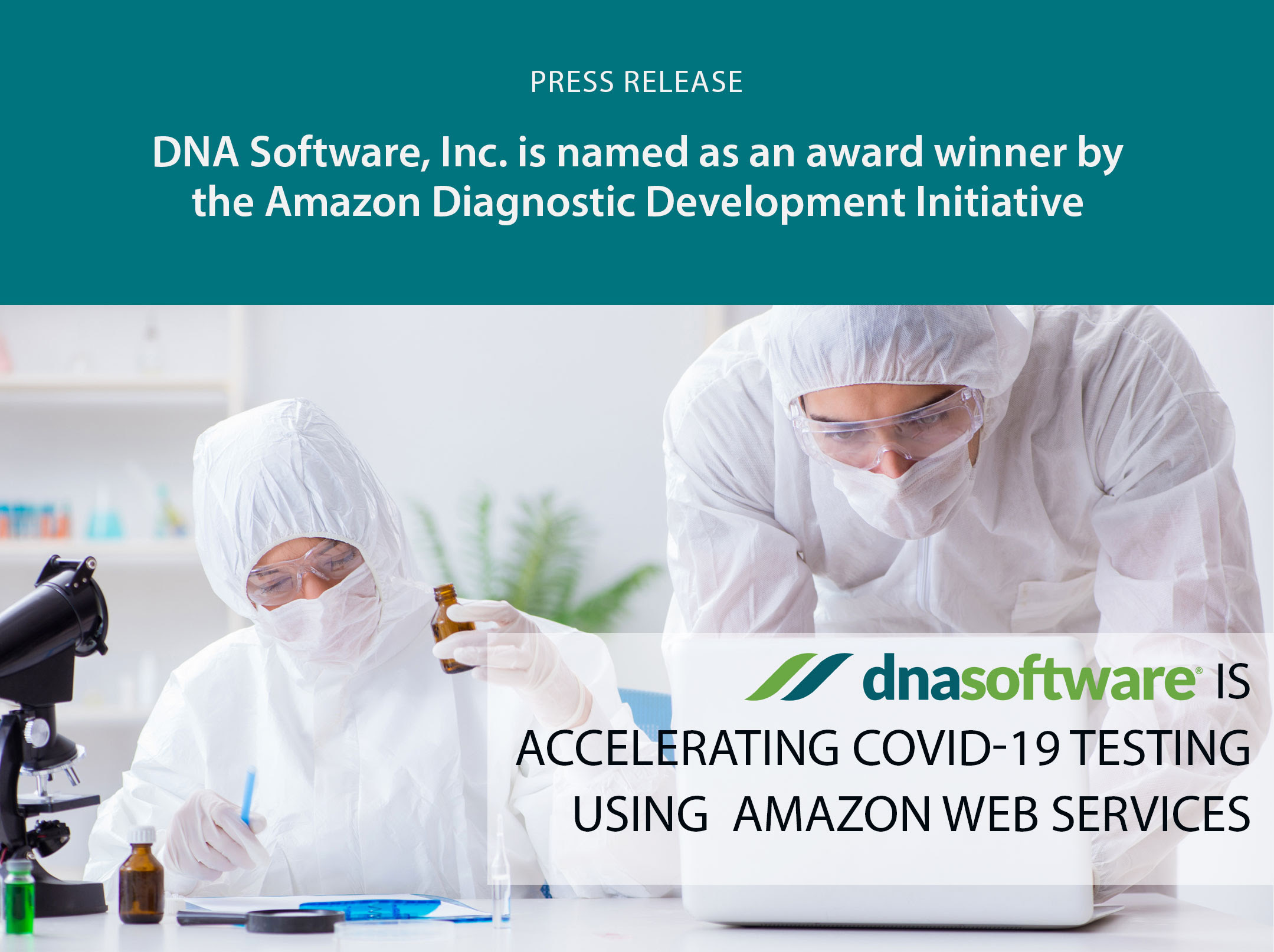 |
| DNA Software, Inc. is harnessing the power of AWS cloud computing to automate the design of PCR primers to detect infectious diseases. DNA Software’s PanelPlex technology is being used by customers around the world to create COVID-19 diagnostics with high accuracy. The computationally intensive process involves 3 steps:  Databases with all known SARS-CoV-2 virus variants are analyzed to determine the least variable regions. Databases with all known SARS-CoV-2 virus variants are analyzed to determine the least variable regions. Minimize false negatives by performing folding simulations to determine regions of the viral genome that are accessible to DNA Minimize false negatives by performing folding simulations to determine regions of the viral genome that are accessible to DNA primers.  Minimize false positives by determining undesired primer binding sites in the genomes of the many organisms present in patient Minimize false positives by determining undesired primer binding sites in the genomes of the many organisms present in patient samples. PanelPlex takes the guesswork out of determining where the primer should go, improves test accuracy, and reduces the time to market for new tests. The technology is powered through donated computing credits provided by the AWS Diagnostic Development Initiative. |
DNA Software receives Frost & Sullivan 2019 Award
 The Award:
DNA Software, Inc. (DNAS) announced today that they have been awarded the 2019 North American Enabling Technology Leadership Award from Frost & Sullivan. This prestigious recognition is based on extensive and ongoing analysis of the North American multiplex PCR software industry by Frost & Sullivan.
“Achieving enabling technology leadership is never an easy task, and it is made even more difficult considering today’s competitive intensity, customer volatility, and economic uncertainty—not to mention the difficulty of innovating in an environment of escalating challenges to intellectual property. In this context, your receipt of this Award signifies an even greater accomplishment. Frost & Sullivan recognizes that this accomplishment is the result of many employees, customers, and investors making daily choices to support your organization” shared Frost & Sullivan Chairman David Frigstad.
Frost & Sullivan notes that DNA Software delivers exceptional customer value through process automation. “PanelPlexTM allows researchers to design high-level multiplex PCR with limited effort and resources, thereby lowering customer’s PCR design and testing budget significantly while accelerating product discovery timeline and time-to-market” commented F&S principal Unmesh Lal. For the full award summary see click here.
“We are pleased to receive independent industry recognition from such a reputable source as Frost & Sullivan. This recognition and award ultimately comes from our customers and partners who have come to trust DNA Software for multiplex design for nearly 2 decades” announced DNA Software CEO John SantaLucia.
About DNA Software, Inc.
DNA Software (DNAS) is headquartered in Ann Arbor, MI and provides software to the life sciences community that improves the design and analysis of molecular diagnostics. DNAS has world-class expertise in the development of nucleic-acid diagnostics with unprecedented sensitivity and specificity, particularly for multiplexed molecular diagnostic assays. These solutions are fully automated, thereby greatly reducing R&D costs compared to traditional trial-and-error experimentation. DNAS has accelerated the discovery timeline for their customers from months to minutes. Please visit https://www.dnasoftware.com.
About Frost & Sullivan
Frost & Sullivan, the Growth Partnership Company, enables clients to accelerate growth and achieve best-in-class positions in growth, innovation and leadership in addition to research and best practice models to drive the generation, evaluation and implementation of powerful growth strategies. Frost & Sullivan leverages more than 50 years of experience in partnering with Global 1000 companies, emerging businesses, and the investment community from 45 offices on six continents. To join our Growth Partnership,
please visit: http://www.frost.com.
Contact:
Joseph A. Johnson
Vice President, Business Development
DNA Software, Inc.
334 E. Washington St.
Ann Arbor, MI 48104
Office: +1 734 222 9080
Website: www.dnasoftware.com
DNA team in collaboration of Hachimoji DNA
Hachimoji:
DNA Software CEO Dr. John SantaLucia, COO Norm Watkins and Research Scientist Holly SantaLucia participated in a recent Science paper was featured in the New York Times, CNN, NASA, Nature, and several other news outlets for building hachimoji DNA.
Practical Applications:
John SantaLucia shared “In addition to the hyped implications for alien life, hachimoji DNA has practical applications to improving DNA-based diagnostics, synthetic biology, and computer data storage.” To read more, click here
Eight Building Block Letters:
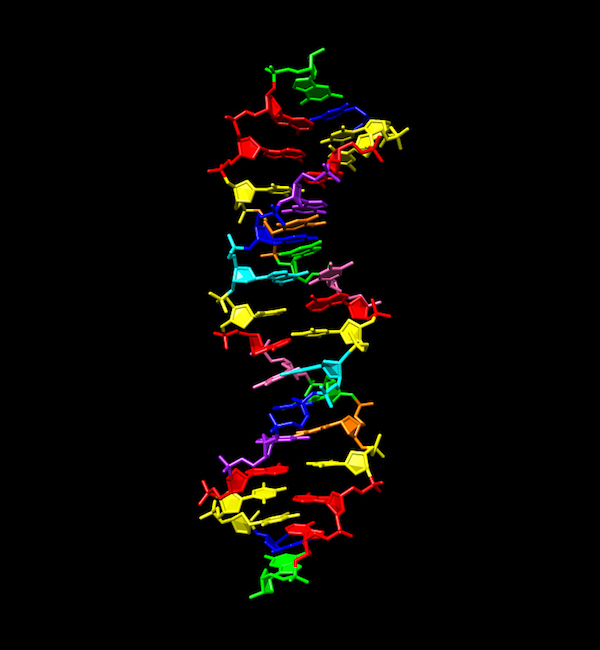
Team built an “alien” DNA system from eight building block letters, so expanding the genetic code from four and doubling its information density. The new system meets all of the requirements for Darwinian evolution and can also be transcribed to RNA.
One of the main characteristics of life is that it can store and pass on genetic information. In modern-day organisms, this is done by DNA using just four building blocks: guanine, cytosine, adenine and thymine (G, A, C and T). Pairs of DNA strands form a double helix with A bonding to T and C bonding to G.
DNAS and Fluidigm Partner in Distribution Pact for CopyCount
Agreement:
NEW YORK (GenomeWeb) – Fluidigm said today that it has entered into a non-exclusive distribution agreement with DNA Software to provide that firm’s CopyCount-CNV software for use with Fluidigm’s Biomark HD system.
Biomark HD is an automated qPCR platform that uses microfluidics to detect CNVs in tens to hundreds of samples with significant cost and time savings over traditional plate‑based methods, according to Fluidigm.
CopyCount-CNV:
DNA Software’s CopyCount-CNV complements the Biomark HD workflow by enabling researchers to measure CNVs with high accuracy by determining the absolute copy number of each marker from raw fluorescence qPCR data and computing the ratio of those copy numbers to reveal the CNV.
Accurate CNV:
The combination of the easy-to-use CopyCount-CNV software and the proven, high-performance Biomark HD automated qPCR system from Fluidigm has the potential to result in more accurate CNV determination in both translational and clinical research, John SantaLucia, co-founder, president, and CEO of DNA Software, said in a statement.